Under Desk Exercise Bike Buyer’s Guide (UK, 2025)
Under Desk Exercise Bike Buyer’s Guide (UK, 2025)
Reading time: 11 minutes
Last updated: December 2025
If you spend long hours at a desk and want a simple way to move more without changing your routine, an under desk exercise bike can help you burn extra calories, improve circulation, and break up sitting time. This guide explains what to expect, how to choose the right model for UK homes and offices, realistic results, and the best alternatives if a desk cycle isn’t quite right for you.
TL;DR
- Under-desk pedal machines increase daily activity and help break up long sitting spells; they’re quiet, compact and office-friendly.
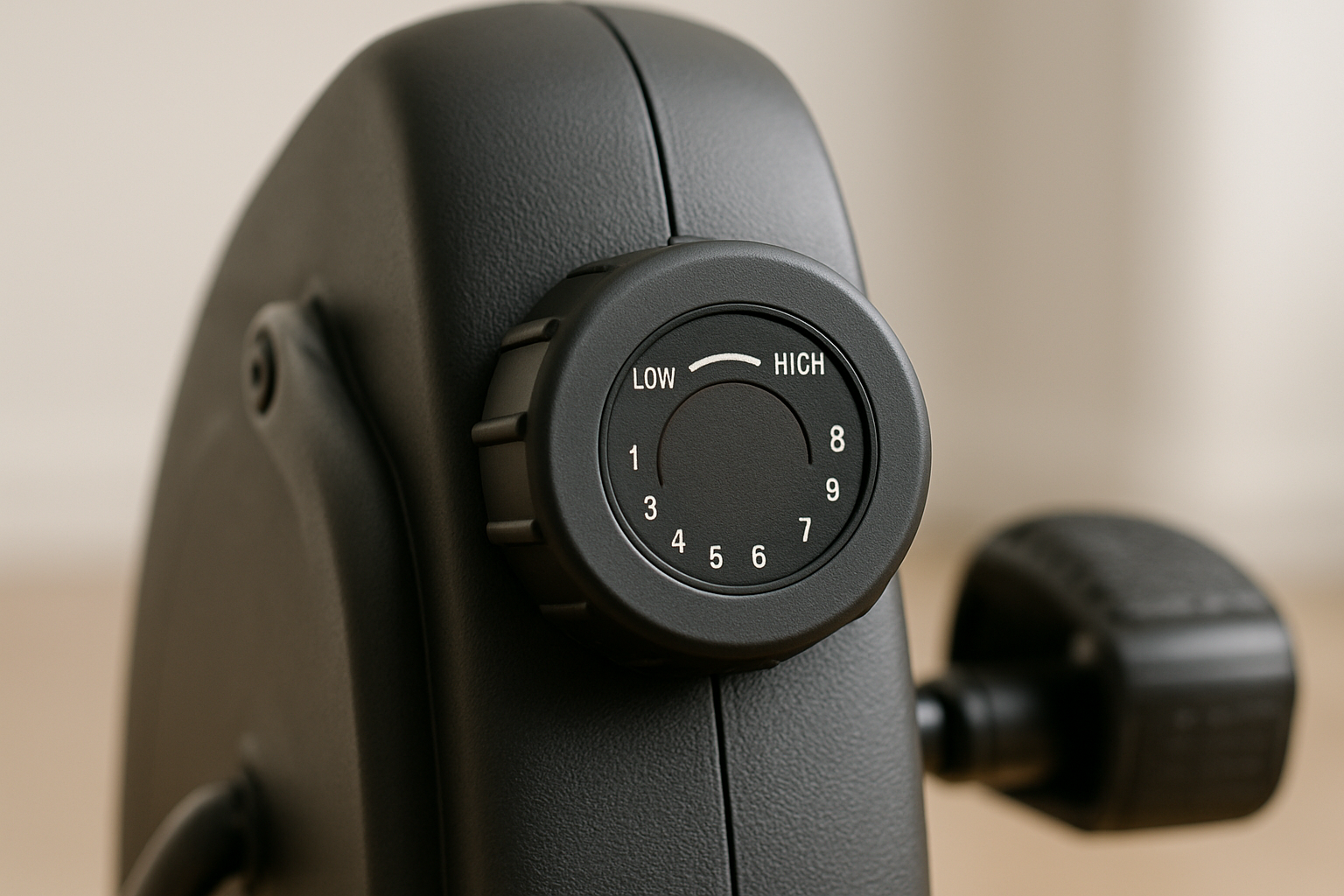
- Choose magnetic resistance for low noise and smooth pedalling; look for a stable base, carry handle, and adjustable tension.
- Expect light-to-moderate intensity: great for NEAT (non-exercise activity thermogenesis) and gentle cardio while working or watching TV.
- Budget £60–£120 for a good entry-level desk cycle; £150–£300 for premium magnetic models with Bluetooth metrics.
- Set your chair height and sit upright; aim for 20–40 minute pedalling bouts, 1–3 times daily, to break up sitting.
- Alternatives: under-desk ellipticals, compact upright bikes, or a rower if you want full-body conditioning—see our best rowing machines.
Table of contents
- What is an under desk bike and who is it for?
- Evidence-based benefits and realistic results
- How to choose an under desk exercise bike
- Space, noise, and setup for UK homes/offices
- Budget tiers and who should buy what
- How to use it: technique, sessions, and progression
- Maintenance and longevity tips
- Alternatives and when they make more sense
- Troubleshooting: common issues solved
- FAQs
- Verdict and next steps
What is an under desk bike and who is it for?
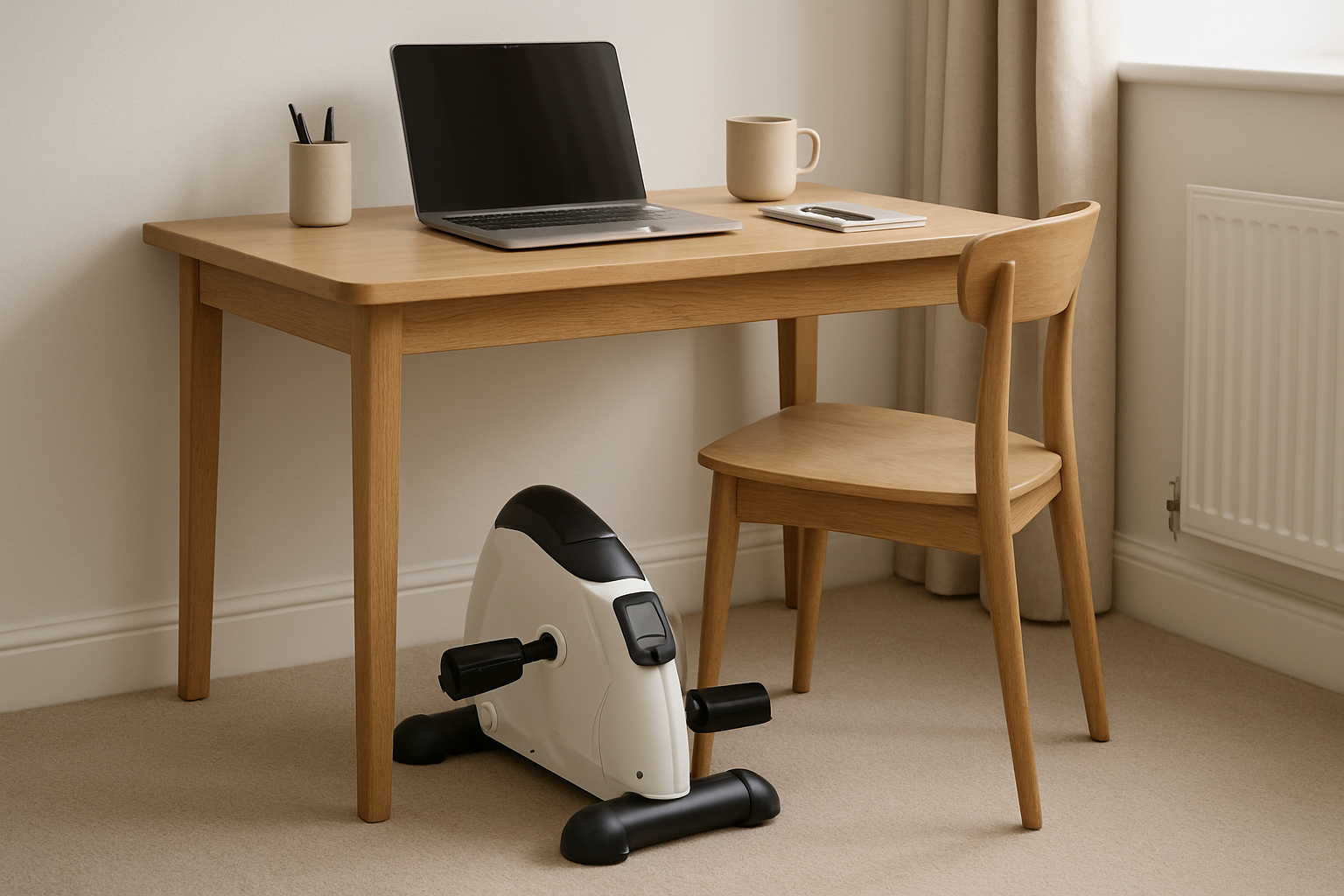
An under-desk bike (also called a desk cycle or mini exercise bike) is a compact pedal unit that sits on the floor under your desk or in front of a chair. You pedal while working, reading, or watching TV. Most models use either magnetic or friction resistance, with 8–16 tension levels.
Best for:
- Office workers and remote workers who sit for long periods.
- Beginners returning to activity, and anyone wanting gentle, low-impact movement.
- People managing joint niggles who prefer non-weight-bearing cardio.
Quick answer to common questions:
- Do they really work? Yes—expect light-to-moderate cardio and extra daily calories burned; not a full training replacement.
- Are they quiet? Good magnetic models are near-silent and suitable for shared spaces.
- How many calories? Varies by resistance and cadence; think ~100–250 kcal per hour for steady, comfortable pedalling for many users.
Evidence-based benefits and realistic results
Under-desk pedalling helps you break up prolonged sitting, which UK guidance recommends for health. The UK Chief Medical Officers advise reducing sedentary time and punctuating long sitting with movement throughout the day (UK CMOs’ Physical Activity Guidelines). The NHS also highlights the health risks of too much sitting and suggests practical ways to sit less (NHS: Why sitting too much is bad for us).
Small, frequent bouts of pedalling can increase daily energy expenditure and improve leg blood flow without disrupting work. Workplace studies show active workstations can boost energy expenditure and reduce sedentary time without harming productivity; see, for example, sedentary-behaviour interventions summarised by Cochrane and public-health bodies (Cochrane Review: reducing sitting at work).
Set expectations:
- Great for NEAT, circulation, and light cardio during otherwise sedentary periods.
- Not a direct replacement for structured workouts; still aim for 150 minutes/week of moderate activity plus strength work (adult guidance per NHS/UK CMOs).
- Pairs well with short walks, a weekly treadmill 5k training plan, or two strength sessions.
How to choose an under desk exercise bike
The right under desk exercise bike balances smooth resistance, stability, and quiet operation. Use this checklist:
1) Resistance system
- Magnetic (best): smooth, low-maintenance, and quiet. Ideal for shared offices or flats.
- Friction: cheaper, but pads can wear and make more noise.
- Look for at least 8 levels; premium units offer 12–16 steps with a clear dial.
2) Flywheel and smoothness
- Heavier internal flywheels (often 2–4 kg in compact units) feel smoother at higher cadence.
- Elliptical-style under-desk trainers reduce knee lift for low desks.
3) Stability and ergonomics
- Wide, rubberised feet and a low centre of gravity reduce slipping.
- A carry handle helps move and store the unit easily.
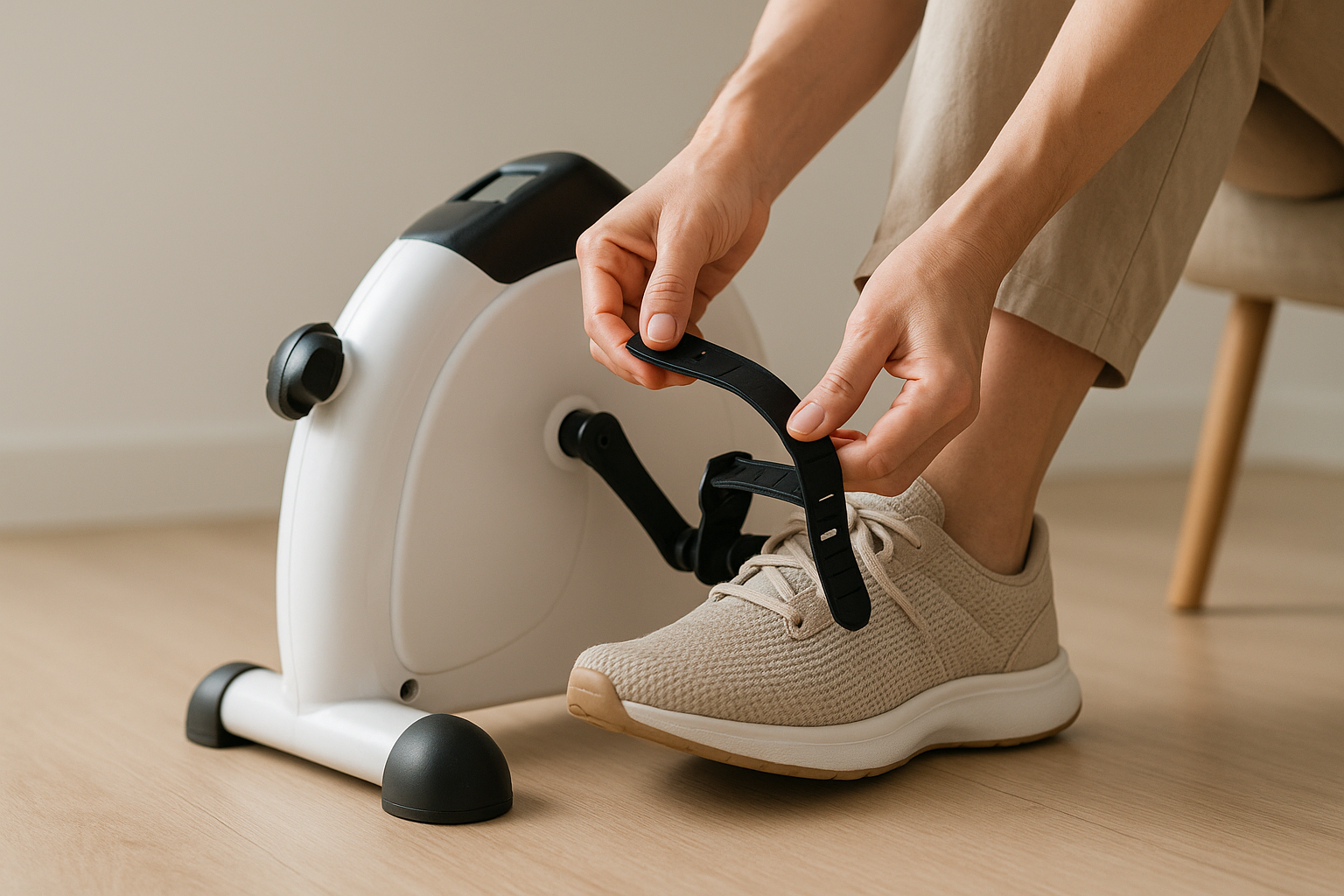
- Pedal angle and strap design matter—adjustable straps keep shoes secure.
4) Noise
- Look for “magnetic” and sealed bearings for near-silent use; typical well-built units run comfortably below normal conversation volume.
5) Console and connectivity
- Basic LCD shows time, distance, speed, and an estimate of calories.
- Bluetooth models sync to companion apps for streaks and reminders.
6) Size and clearance
- Typical footprint: 50–65 cm long x 30–40 cm wide, 25–35 cm high.
- Check knee clearance under your desk—adjust chair height or pick an elliptical-style unit for lower lift.
7) Build, warranty, and support
- Metal frame and quality bearings extend life; 12–24 month warranty is common.
- Check spare parts and customer support availability in the UK.
Space, noise, and setup for UK homes/offices
Under-desk bikes are designed for tight spaces. Most slide under standard UK desks (approx. 72–75 cm high), especially when paired with an adjustable office chair.
- Flooring: Use a thin mat for grip on hardwood or tile and to protect floors.
- Noise: Good magnetic models are quiet enough for calls. Avoid friction pads if you share a workspace.
- Storage: Slip into a cupboard, under a sofa, or next to a desk between uses.
Budget tiers and who should buy what
- Budget (£60–£120): Basic magnetic or friction resistance; simple LCD; suitable for light use and trying the concept without overspending.
- Mid-range (£120–£180): Better bearings and stability; quieter pedalling; more resistance steps; occasional Bluetooth.
- Premium (£180–£300+): Robust magnetic systems, smooth pedalling at higher cadence, quality displays or app support, and stronger warranties.
Who should buy what:
- Beginners and small spaces: Budget or mid-range magnetic model.
- Daily office use: Mid-range or premium for noise and comfort.
- Rehab/light mobility: Magnetic with the lowest step-over height; consider elliptical-style pedals for reduced knee lift.
How to use it: technique, sessions, and progression
Set-up and posture
- Chair height: knees should bend comfortably without hitting the desk. Sit tall, ribs over hips, shoulders relaxed.
- Pedal straps: snug over the midfoot to prevent foot slip.
- Resistance: start light; you should maintain conversation easily (RPE 3–4/10) while working.
Starter sessions
- Begin with 10–15 minutes after each hour of sitting, 2–3 blocks per day.
- Progress to 20–40 minutes, 1–3 times daily, most days of the week.
- Optional intervals: 2 minutes easy, 1 minute moderate, repeat for 20–30 minutes if your task allows.
Pair with structured training
- Add two weekly strength sessions and one focused cardio session (e.g., see our treadmill 5k training plan).
- For a full-body cardio option at home, compare options in our best rowing machines guide.
Pro tips
- Keep cadence smooth; avoid stomping on the pedals.
- Microbreaks: stand, stretch, or do 10 bodyweight squats every hour.
- Use a chair with good lumbar support; consider a seat cushion for long sessions.
Common mistakes
- Too much resistance too soon—leads to rocking chair or knee discomfort.
- Leaning forward on the desk—causes neck/shoulder tension.
- Neglecting strength work—desk pedalling complements but doesn’t replace it.
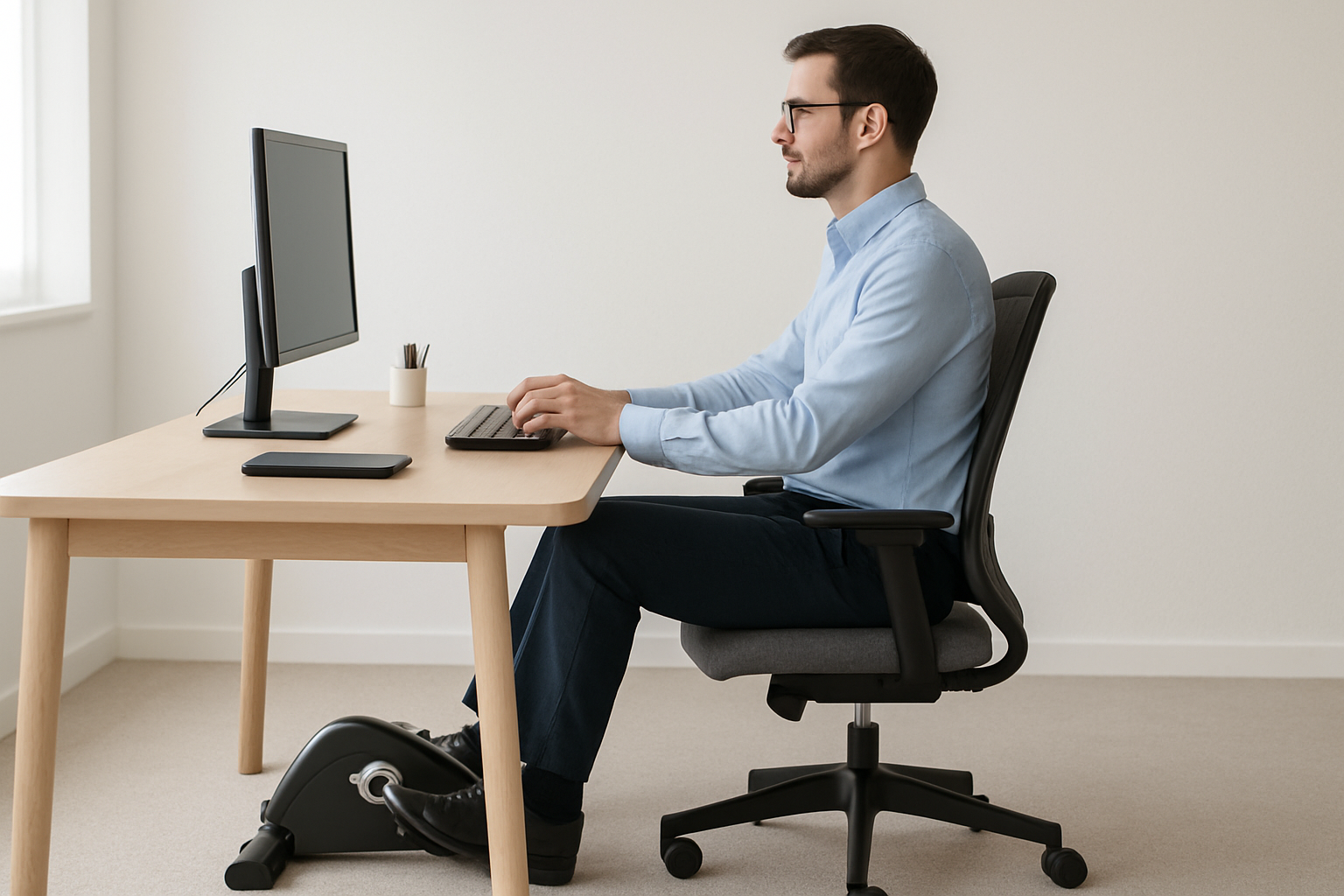
Form diagram suggestion
Diagram idea: “Under-desk bike setup checklist” with side-on silhouettes showing chair height, knee clearance under desk, neutral spine, and pedal strap placement.
Maintenance and longevity tips
- Wipe down sweat and dust weekly; keep pedals and straps clean.
- For friction models: inspect pads and tension band every few months.
- Retighten pedals and visible bolts quarterly to prevent creaks.
- Store in a dry space; avoid radiator or damp areas to protect bearings.
Alternatives and when they make more sense
Under-desk elliptical
Similar footprint with a flatter, elliptical motion that reduces knee lift—ideal for very low desks. Slightly heavier and sometimes pricier than pedal-only units.
Compact upright bike
If you want higher-intensity workouts in short bursts, a compact upright bike delivers better cardio stimulus but requires dedicated time and space.
Rowing machine
For full-body, low-impact cardio and stronger fitness gains, a rower is excellent. Explore our best rowing machines and see performance impressions in our BodyMax Oxbridge HR Air Rowing Machine review.
Hybrid cross trainer + exercise bike
Want variety on a tight budget? A 2‑in‑1 can be versatile for short, structured sessions—see the balanced take in our JLL CT100 review.
Quick comparison
Desk bike: easiest way to move while working; light cardio. Under-desk elliptical: lower knee lift; slightly bulkier. Compact upright: higher-intensity sessions; needs space/time. Rower: full-body conditioning; needs a clear workout slot and more floor space.
Troubleshooting: common issues solved
- Chair rocking or sliding: Lower resistance, slow the cadence, and place a grippy mat under the unit and chair.
- Knees hitting desk: Raise chair slightly, slide the unit a touch forward, or choose an elliptical-style model.
- Knee discomfort: Reduce resistance, ensure feet are strapped securely, and keep knees tracking over midfoot. If pain persists, stop and seek professional advice.
- Squeaks/creaks: Retighten pedals and bolts; for friction units, check wear on pads and the belt.
FAQs
Is an under-desk bike good for weight loss?
It helps increase daily calorie burn and reduces prolonged sitting. Combine with dietary changes and weekly structured exercise for meaningful weight loss.
How long should I pedal each day?
Start with 10–15 minutes, 2–3 times daily, and build to 20–40 minute bouts. Break up long sitting spells per UK guidance.
Will it disrupt my work?
Most users maintain focus at light resistance. Use moderate resistance only for tasks that don’t require fine motor control or intense concentration.
Are they quiet enough for calls?
Magnetic models are typically very quiet. Ensure your chair is stable to avoid movement noise.
Do I still need other exercise?
Yes. Aim for 150 minutes of moderate activity weekly plus strength training on 2 days (NHS/UK CMOs). Desk cycling is a great supplement.
What about step count?
Pedalling won’t increase steps, but it increases activity and energy expenditure. Still aim for regular walking breaks.
Can I use it while gaming or watching TV?
Absolutely—many people find this the easiest way to rack up time at light-to-moderate intensity.
Safety and medical disclaimer
If you’re new to exercise, have joint pain, cardiovascular, metabolic, or other health conditions, consult your GP or a qualified professional before starting. Progress gradually, use sensible resistance, and stop if you feel pain, dizziness, or unusual shortness of breath.
Verdict and next steps
An under-desk bike is an affordable, quiet, and space-saving way to move more during sedentary hours. Choose a magnetic model with solid stability, set up your desk ergonomics, and aim for frequent, easy pedalling bouts. Pair with a weekly strength routine and one focused cardio session for the best health and fitness return.
Ready to level up your home setup? Compare cardio alternatives in our best rowing machines, read our hands-on BodyMax Oxbridge HR Air Rowing Machine review, or explore hybrid options in the JLL CT100 review. Planning a full setup? See how to build a home gym. Runners can slot in desk pedalling for recovery days alongside our treadmill 5k training plan.
Related reading
- best rowing machines
- BodyMax Oxbridge HR Air Rowing Machine review
- JLL CT100 review
- treadmill 5k training plan
- build a home gym
Glossary
- NEAT: Non-exercise activity thermogenesis—energy used for everything that isn’t structured exercise or sleep.
- RPE: Rating of Perceived Exertion—how hard the effort feels on a 1–10 scale.