Rowing Machine Workout Plan (UK): 8-Week Beginner Programme
Reading time: ~10 minutes
Last updated: February 2026
Rowing Machine Workout Plan (UK): 8-Week Beginner Programme
If you’ve just brought a rower into your home or you’re dusting one off, this rowing machine workout plan shows you exactly how to train for fitness, fat loss and full-body conditioning in 8 weeks. It’s built for UK beginners training at home, with simple sessions that scale up sensibly, clear technique cues, and evidence-led recovery and nutrition tips. Expect 3–4 sessions per week, 20–40 minutes each, progressing from easy aerobic rows to controlled intervals. You’ll also get setup advice and alternatives if you don’t own a rower yet—see our best rowing machines guide.
At a glance: train 3 days in Week 1, build to 4 days by Week 7–8; aim for 20–35 minutes per session; target 22–28 strokes per minute (spm) for most work; use Rate of Perceived Exertion (RPE) 3–7 as your main intensity guide; keep damper/drag at a moderate setting (not max).
- Beginner-friendly and progressive: start with technique and aerobic base, then add intervals.
- 3–4 sessions per week; 20–40 minutes; realistic for busy UK schedules and small spaces.
- RPE and spm targets for every session; simple heart-rate zones optional.
- Technique cues to protect your back and knees; common mistakes to avoid.
- Nutrition and recovery made simple: protein per kg, hydration, and sleep baselines (NHS and CMO guidelines linked).
- Cross-training options if you don’t own a rower yet, plus a quick comparison of rower types.
Table of contents
- Benefits of this plan
- Equipment and setup
- Your 8-week rowing machine workout plan
- Warm-up and cooldown
- Technique and form cues
- Common mistakes
- Injury prevention and recovery
- Nutrition and hydration fundamentals (UK)
- Space, noise and home setup tips
- Alternatives and cross-training
- FAQs
- Related reading
- Conclusion and next steps
Benefits of this plan
Rowing is low-impact, trains the legs, core and upper body together, and is time-efficient for cardio and strength endurance. A structured plan helps you:
- Build an aerobic base and improve everyday fitness.
- Burn calories and support healthy weight management.
- Strengthen the posterior chain (glutes, hamstrings, back) while sparing joints.
- Develop technique that reduces injury risk.
The UK Chief Medical Officers recommend at least 150 minutes of moderate or 75 minutes of vigorous aerobic activity weekly, plus strength work on 2+ days. This plan helps you meet those targets sensibly (CMO guidelines; NHS: Exercise).
Equipment and setup
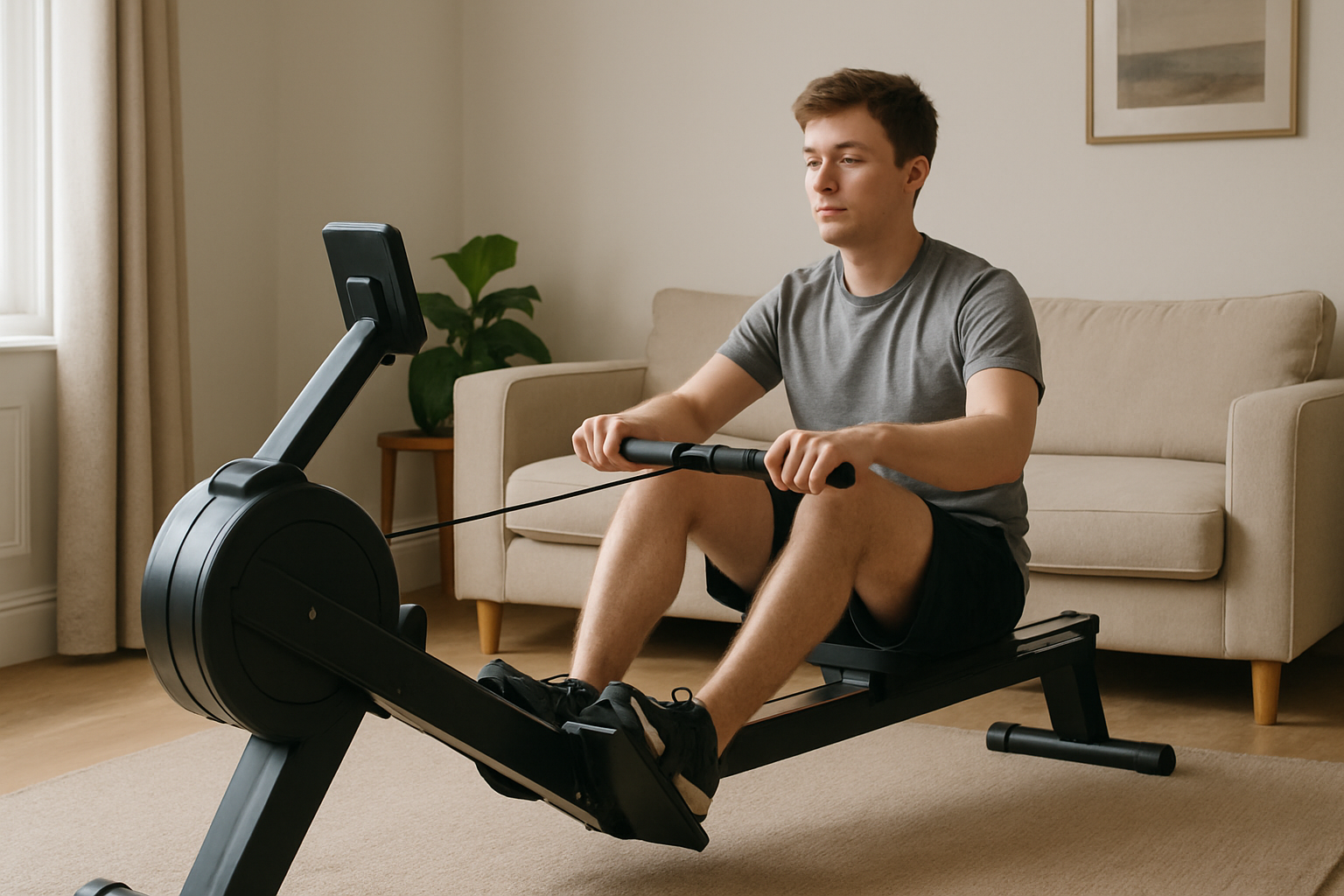
You can follow this programme on most air, magnetic or water rowers. If you’re still choosing, compare options in our best rowing machines guide. If you’re considering an affordable air rower, see our hands-on BodyMax Oxbridge HR Air Rowing Machine review.
Key setup checks:
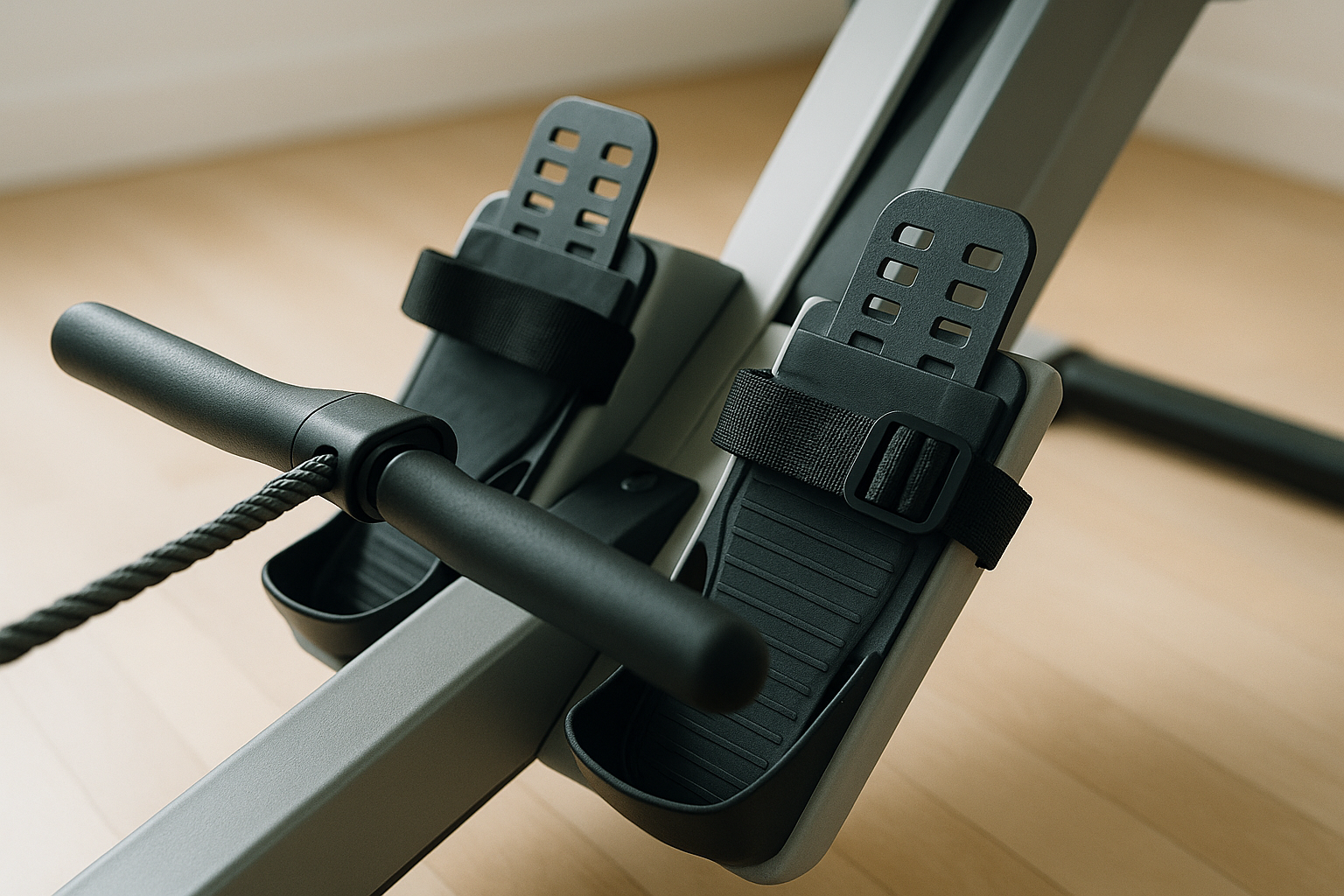
- Footplate: strap across the widest part of your foot; shins vertical at the catch.
- Damper/drag: start mid setting (air: 3–5 of 10), aiming for smooth strokes—not maximal resistance.
- Monitor: show time, distance, pace (split time), spm and heart rate if available.
- Seat and rail: clean, secure, level; small mat to protect floors and reduce noise.
Quick comparison (rower types):
- Air: resistance increases with stroke power; great for intervals; slightly noisier.
- Magnetic: quieter, consistent resistance; good for flats and early mornings.
- Water: realistic feel and sound; resistance linked to stroke speed and water level.
Your 8-week rowing machine workout plan
This progressive rowing machine workout plan uses RPE (1–10) and spm targets. Optional HR zones refer to % of estimated HRmax (220 − age). RPE is a valid, practical guide to exercise intensity when used with experience (Borg RPE overview).
Weekly structure
- Weeks 1–2: 3 sessions/week (2 steady, 1 technique intervals)
- Weeks 3–4: 3 sessions/week (1 steady, 1 intervals, 1 variable)
- Weeks 5–6: 4 sessions/week (2 steady, 2 intervals)
- Weeks 7–8: 4 sessions/week (1 steady, 2 intervals, 1 long easy)
Weeks 1–2: Learn rhythm and build an aerobic base
- Session A – Steady technique row: 18–22 minutes continuous at RPE 3–4 (HR 60–70% HRmax), 22–24 spm. Focus on clean strokes.
- Session B – Intro intervals: 6 x 1 minute at RPE 5 (24–26 spm) / 1 minute easy (RPE 2–3). Total incl. warm-up/cooldown ~22–24 minutes.
- Session C – Steady: 20–24 minutes at RPE 3–4, 22–24 spm. Try to match or slightly beat Session A distance.
Weeks 3–4: Extend time and introduce threshold work
- Session A – Steady+: 24–28 minutes at RPE 4 (22–24 spm). Include 3 x 2 minutes at RPE 5 sprinkled in.
- Session B – Threshold intervals: 4 x 4 minutes at RPE 6 (HR ~75–85%, 24–26 spm) / 2 minutes easy. Total 28–32 minutes.
- Session C – Variable rate: 3 rounds of 5 minutes at 22 spm (RPE 4) + 2 minutes at 26 spm (RPE 5–6). Total 21 minutes plus warm-up/cooldown.
Weeks 5–6: Build power endurance
- Session A – Long steady: 30–35 minutes at RPE 4, 22–24 spm. Keep breathing conversational.
- Session B – Short intervals: 10 x 1 minute at RPE 7 (26–28 spm) / 1 minute easy. Focus on strong, crisp strokes.
- Session C – Threshold: 3 x 6 minutes at RPE 6 / 2 minutes easy. Aim consistent split times across reps.
- Session D – Technique + easy: 18–22 minutes at RPE 3 with drills (see Technique section).
Weeks 7–8: Consolidate and test
- Session A – Progression steady: Start 10 minutes at RPE 3, then 10 minutes RPE 4, finish 5–10 minutes at RPE 5 (24–26 spm). 30–35 minutes total.
- Session B – Mixed intervals: 5 x 2 minutes at RPE 7 / 2 minutes easy, then 8 x 30 seconds hard (RPE 7–8, 28 spm) / 30 seconds easy. Total 28–32 minutes.
- Session C – Long easy: 35–40 minutes at RPE 3–4, 22–24 spm. Keep it smooth.
- Session D – Benchmark: Choose either (a) 2,000 m time trial at RPE 7 cap, or (b) 20-minute distance test at RPE 6. Warm up thoroughly; record average split and spm.
Progression notes
- If sessions feel too easy, increase duration by 2–4 minutes or nudge spm by +1.
- If fatigued, drop one interval set or hold at the previous week’s volume.
- Keep at least one easy day between hard interval sessions.
Warm-up and cooldown
Warm-up (6–8 minutes)
- 2 minutes very easy rowing, focus on long strokes.
- 1 minute legs-only (strap in, straight arms/back, just push with legs).
- 1 minute arms-and-back-only (light pulls, no leg drive).
- 2 x 30 seconds at RPE 5, 30 seconds easy.
- Off-rower: 30 seconds each of hip hinges, thoracic rotations, ankle rocks.
Cooldown (5 minutes)
- 3 minutes very easy rowing, long exhales.
- Light stretches: hamstrings, hip flexors, thoracic openers, forearms (20–30 seconds each).
Technique and form cues
Rowing stroke sequence
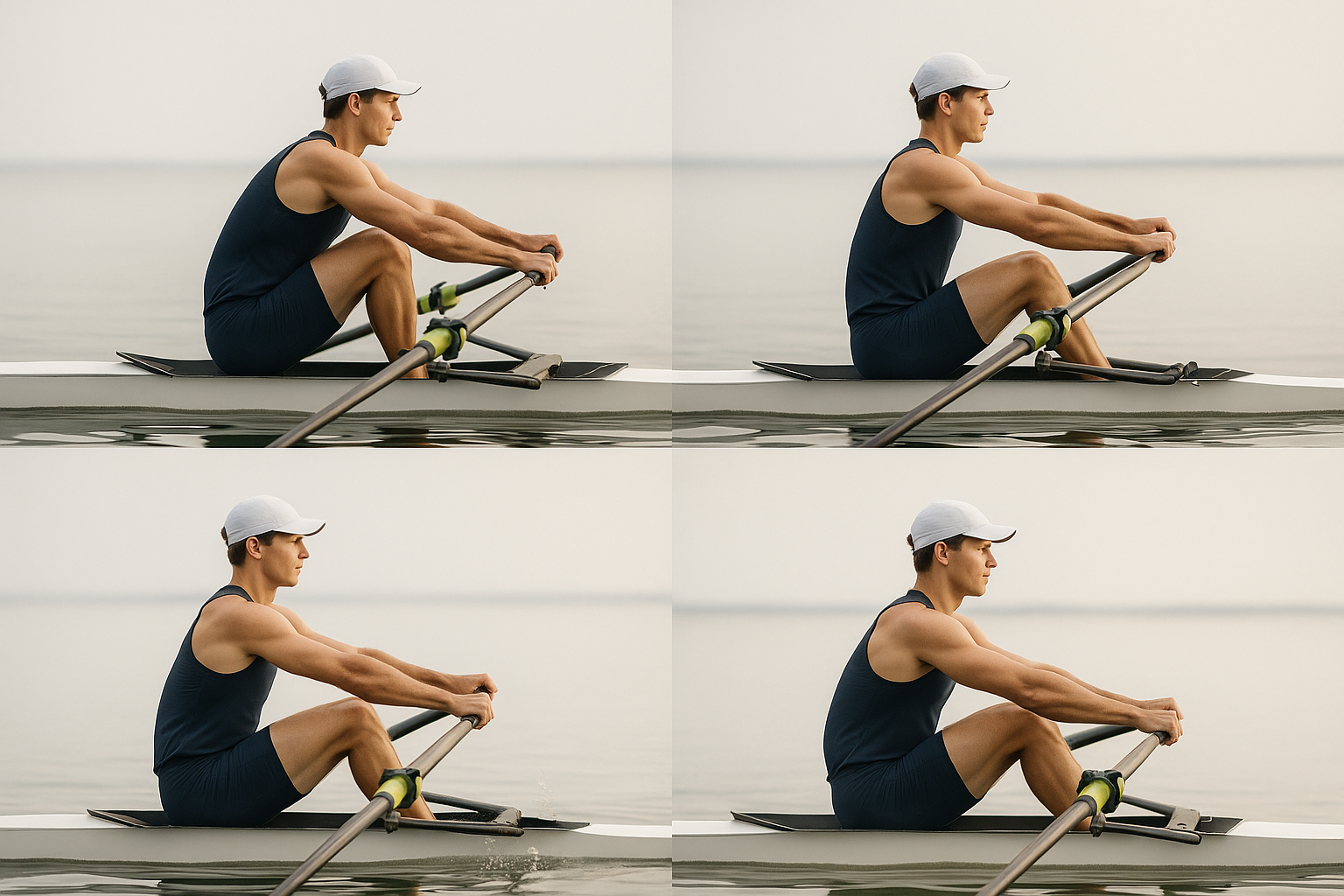
- Catch: shins vertical, heels down as much as comfortable, torso tall, lats engaged.
- Drive: legs push first, then swing hips slightly open, then finish with arms.
- Finish: handle to lower ribs, elbows past body, wrists neutral.
- Recovery: arms away, body over, then knees bend—slow on the slide back.
Drills (add to easy sessions):
- Paused finish: 10 strokes with 1-second pause at finish; feel lats and core.
- Pick drill: arms-only → arms+body → half-slide → full-slide (1 minute each).
- Rate control: cap spm at 22 while holding consistent split.
Pro tips
- Think “legs, body, arms” on the drive; “arms, body, legs” on the recovery.
- Exhale as the handle passes your knees to sync breathing with power.
- Keep shoulders down and away from ears; avoid shrugging.
Common mistakes
- Over-high damper: feels hard but slows cadence and strains the back. Start moderate.
- Early arm pull: robs leg power. Delay arms until legs are nearly straight.
- Rushing the slide: recovery should be slower than the drive.
- Hunched posture: maintain neutral spine; hinge at hips, not lower back.
Injury prevention and recovery
- Back-friendly mechanics: hinge from hips, brace lightly; avoid rounding in the catch.
- Volume management: add 5–10% per week; take a lighter week if niggles arise.
- Mobility focus: hips, thoracic spine, ankles; 5 minutes post-session is enough.
- Persistent pain: reduce intensity and consult a GP or qualified professional. For low back pain management advice, see NICE guidance.
Disclaimer: If you’re new to exercise, have cardiovascular, metabolic or musculoskeletal conditions, or are pregnant, speak to your GP before starting. Progress gradually and stop a session if you feel dizzy, unwell or experience sharp pain.
Nutrition and hydration fundamentals (UK)
- Protein: ~1.2–1.6 g per kg bodyweight per day supports recovery and adaptation.
- Carbohydrates: include a palm-sized carb source 1–3 hours pre-session for energy on interval days.
- Hydration: arrive hydrated; sip ~300–500 ml water in the hour before, then small sips during longer sessions. Replace fluids after. See NHS hydration advice: Water, drinks and your health.
- Weight management: pair consistent training with a modest calorie deficit if fat loss is a goal; keep protein high, fibre-rich veg daily.
- Sleep: aim for 7–9 hours; it’s a major driver of performance and body composition.
Space, noise and home setup tips
- Small UK flats: choose magnetic rowers for quieter operation; use a rubber mat.
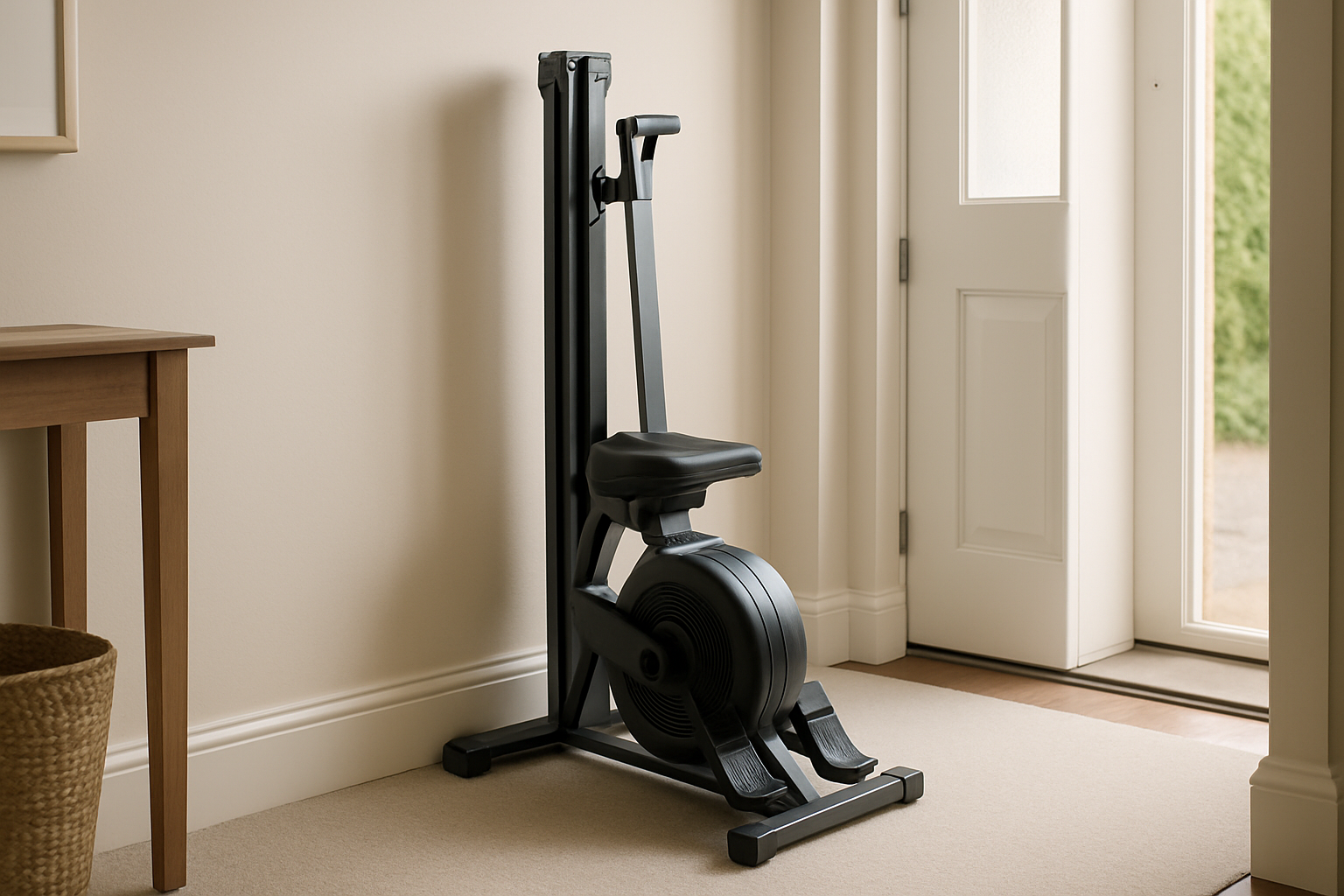
- Storage: many models fold vertically; measure ceiling height and hallway width before buying.
- Flooring: protect with a 6–10 mm equipment mat to cut vibration and marks.
- Home gym planning: see how a rower fits into your space with our guide to build a home gym.
Alternatives and cross-training
No rower yet or fancy variety? Substitute one steady session per week with:
- Elliptical/cross trainer: similar low-impact cardio. Considering a budget-friendly 2‑in‑1 option? Our JLL CT100 review covers pros, cons and best use-cases.
- Treadmill: great for aerobic base and intervals; try our structured treadmill 5k training plan.
- Bike: similar heart-rate zones; match time and RPE from this plan.
Quick comparison
- Rowing engages more upper body and posterior chain than cycling or running.
- Ellipticals can be quieter for flats but offer less trunk rotation than rowing.
- Treadmills load bones and tendons more (useful for bone health) but are higher impact.
FAQs
How many days per week should beginners row?
Start with 3 days and build to 4 as recovery allows. Keep at least one easy day between hard sessions.
Is rowing good for weight loss?
Yes—rowing burns significant calories while preserving muscle. Combine consistent training with a small calorie deficit and adequate protein for best results (see NHS guidance linked above).
What spm should I aim for?
For most steady work, 22–24 spm. Threshold intervals 24–26 spm. Short, hard intervals 26–28 spm. Prioritise power per stroke over high rate.
What damper setting is best?
Moderate. On many air rowers that’s 3–5 of 10. Higher isn’t better for beginners; it often degrades form.
How long until I see results?
Most beginners notice fitness and technique gains within 3–4 weeks, with clearer changes by 6–8 weeks if sessions are consistent.
Can I do intervals as a beginner?
Yes, in small doses. Start with short 1-minute efforts at RPE 5–6 and extend gradually, as outlined in Weeks 1–4.
How do I avoid back pain?
Hinge at the hips, brace lightly, don’t early-pull with the arms, and avoid over-high damper. If pain persists, reduce volume and seek professional advice (see NICE link).
Do I need a heart-rate monitor?
No. RPE and spm are enough. A monitor can refine pacing if you enjoy the data.
Related reading
- Compare models in our best rowing machines.
- Considering an air rower? Read the BodyMax Oxbridge HR Air Rowing Machine review.
- Cross-training idea: JLL CT100 review.
- Running indoors? Try our treadmill 5k training plan.
- Planning space and kit? See how to build a home gym.
Conclusion and next steps
This 8-week beginner programme balances technique, aerobic base and intervals so you gain fitness without frying your back or motivation. Keep the damper moderate, rate under control, and progress volume slowly. Pair sessions with simple nutrition and good sleep—results will follow.
Next steps: compare and choose a model in our best rowing machines guide, or check the BodyMax Oxbridge HR Air Rowing Machine review if you like air rowers. Prefer running? Follow our treadmill 5k training plan.
Glossary
- RPE: Rate of Perceived Exertion (1 = very easy, 10 = maximal).
- spm: strokes per minute; your stroke rate.
- Split time: pace shown as time per 500 m (lower = faster).
- Threshold: a comfortably hard pace you can hold for ~20 minutes (RPE ~6).